
Stone, Glass or Acrylic Splashbacks: Which Suits an Adelaide Kitchen
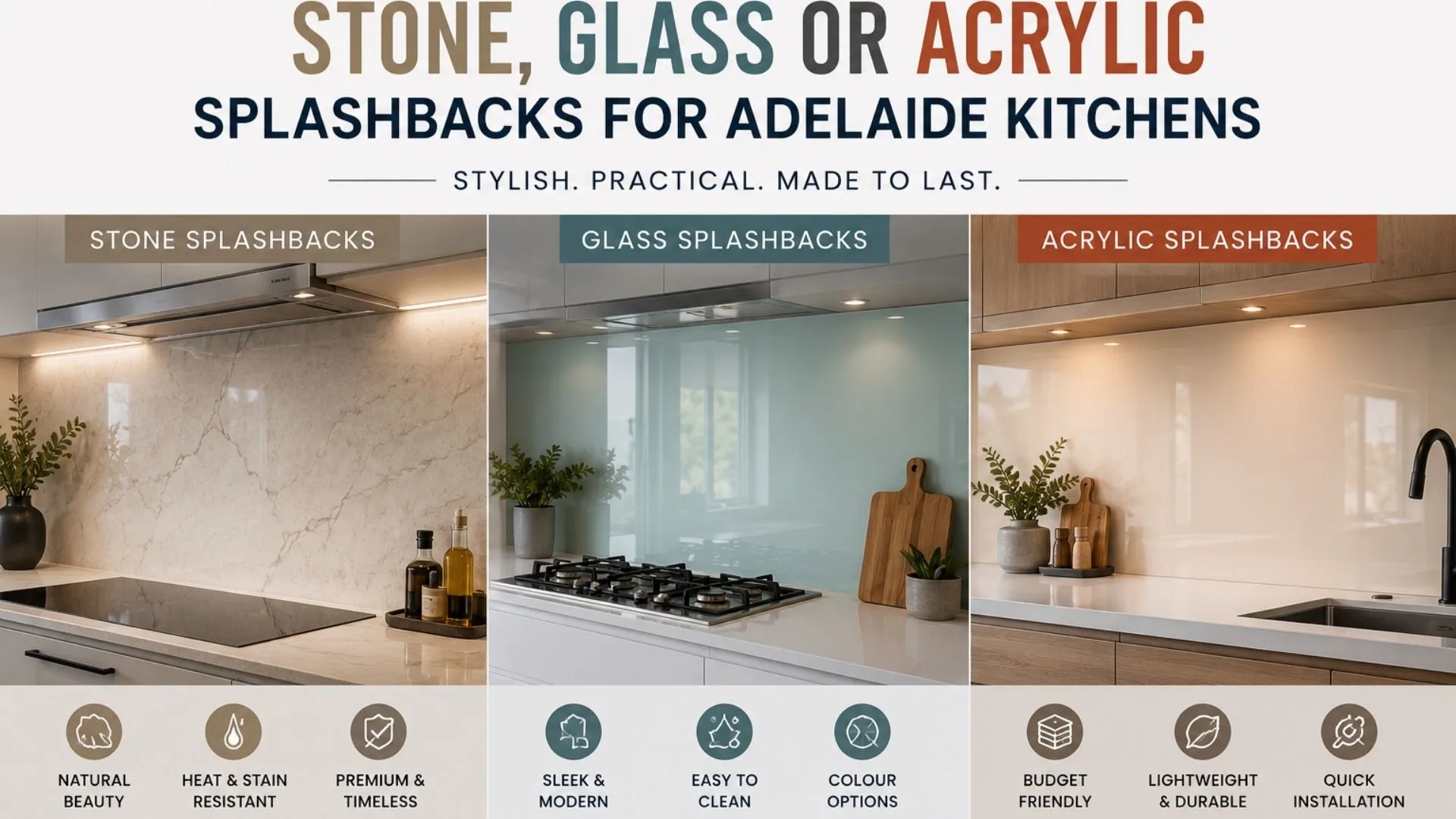
In Adelaide, a kitchen splashback is a significant element. It not only withstands daily cooking conditions such as heat, steam, or stains but also has a great impact on the color and texture. In addition to this, glass offers a crystal and reflective appearance. Stone adds depth, strength, and a high end look. Acrylic keeps it more lightweight, and there are lots of color selections. Well-chosen Kitchen Splashbacks should suit how you cook, your cabinetry palette, the benchtop design, and the level of maintenance you want over time. In this article, a comparative study will be done for the advantages, colors, and installation details of stone, glass, and acrylic splashbacks.
What Is a Kitchen Splashback?
A kitchen splashback is the surface that is installed as a shield to protect the wall behind the cooktop, sink, or preparation bench. It protects painted plaster and other wall surfaces from water, grease, sauces and food splatter and steam. In addition to protection, it will also provide a very visible strip between benchtop and overhead cabinetry. This implies that it could alter the look of the total kitchen in terms of how bright, spacious, warm or dramatic it is.
Glass Splashbacks: Sleek, Bright and Customizable
Glass is a first class choice for those people who want their kitchen to look modern and sleek.
Easy to Clean
Beyond looking visually appealing, glass has a smooth surface that does not retain moisture and does not show any lines or scratches. Even the maintenance is easy; just wipe out the stains with a smooth cloth and mild chemical cleaners, and you are done.
Customisable
You can find back painted glass in different color palettes, and with proper finishing, it presents a reflective and aesthetic surface. You can also easily match cabinetry, benchtops, flooring and tapware without affecting the pattern.
Heat Resistant
Toughened Safety Glass is better able to stand up to the heat compared to decorative glass and is generally used in the surroundings of cooking areas. Even with the correct glass specification, measurements, cut outs, and installation, they still remain important near the cooktop, power points, and other heat sensitive kitchen elements.
Stone Splashbacks: Premium, Strong and Timeless
Kitchens with a stone splashback look great when they are used as an integral part of the building’s structure, instead of just a protective barrier over the wall.
Durable and Long-Lasting Surface
The right stone product and maintenance can provide the strength and durability to serve in a busy kitchen setting. Its rigid finish also lends itself to full height splashbacks, allowing for continuity from benchtop to cabinetry.
Natural Patterns and Premium Appeal
Natural stone adds veining, mineral movement and tonal variation, which are things that printed surfaces attempt to copy. Patterns can be quieter, and fit in well with other cabinetry and benchtops, or marble or granite can bring the splashback into focus.
Heat, Stain and Moisture Resistant
Most appropriate stone surfaces respond well to the daily wet and splashing uses, stains from cooking, etc., but this will depend on the type of stone and finish used. In some instances, natural stone might need sealing, and hot cookware should not be placed directly onto surfaces unless the supplier states otherwise.
Acrylic Splashbacks: Practical and Budget-Friendly
Acrylic becomes the primary choice during renovation when low weight, color, and convenience are prioritized rather than stone weight or hardened glass.
Cost-Effective
Acrylic is frequently used where the renovation budget needs to cover the cabinetry, appliances, flooring, and splashback. Can provide a clean paneled appearance at lower upfront expenses compared to higher end glass or natural stone choices.
Lightweight and Easy to Install
Compared to heavy stone slabs or glass panels, Acrylic is more handy as it is extremely lightweight. However, cutting around the corners, sockets, and cabinetry is still significant, provided on an already prepared plain surface wall.
Available in a wide range of Colors
You can find Acrylic splashback in multiple colors and modern finishes, which give the versatility to fit into neutral cabinetry or in a kitchen with a bold color background. For example, beige, green, grey, or charcoal colors set a different ambiance.
Pairing Your Splashback With a Brown/Beige Kitchen
Warm cabinetry is a good choice of splashback, giving a natural tone and clean contrast without making the palette look mismatched.
- Use warm stone tones: In beige colored cabinetry, cream, ivory, sand, and light veined stone can be easily blended.
- Keep undertones consistent: Incorporating brown with a red tint gives a different shade compared to cool taupe or mushroom beige. Therefore, make the final decision by comparing whether your chosen splashback colors are going along with the cabinet door or benchtop under your kitchen lighting.
- Introduce contrast carefully: Beige color schemes can be sharpened by smoky glass, soft white stone or muted charcoal. If the timber grain or benchtop has sufficient movement, do not mix a number of bold patterns chosen for Kitchen Splashbacks.
Pairing Your Splashback With a Black Kitchen
A black kitchen has a bold outlook, so make sure the splashback adds a soft and soothing feeling to the kitchen. For example, if your cabinetry is painted with any dark color, then pale stone would be ideal. Glass would also be wonderful, as it can reflect back the light; smoky or charcoal shaded color offers an understated feel. Remember also the benchtop. If it is very patterned, use a quieter splashback or else the patterns will clash.
Pairing Your Splashback With a White Kitchen
In white cabinetry, you can get many flexible options, but still its beauty lies in the choice of splashbacks, flooring, and benchtops.
- Add movement with stone: A white or grey stone splashback offers great depth to the kitchen area without affecting its clean, bright and spacious appearance.
- Bring in controlled color: Keeping white in the background, you can easily use sage, dusty blue or warm grey as the main feature.
- Use contrasting appearance: White cabinetry goes well with charcoal, black or smoky finishes. Repeat a darker color in the tapware, handles, light or appliance and create a sense of contrast and not isolation.
Avoid Common Splashback Mistakes Before Installation in Adelaide
Good material can still produce a disappointing result when measurements, heat exposure, legal requirements or surrounding finishes are treated as afterthoughts.
- Do not choose based on only color: Instead compare the splashback with the cabinet door, benchtops, flooring styles and also lighting. Warm colors can appear differently in showrooms compared to cool LEDs or high Adelaide daylight.
- Check cooktop suitability before ordering: Acrylic products have fewer restrictions with direct heat than toughened glass, and each glass or stone product comes with its own installation requirements.
- Do not rely on banned engineered stone products: The Australian government has banned the use of engineered stone products. Adelaide renovators must ensure that before they install any proposed slab or panel, that panel is legally compliant and appropriate for the task they have in mind.
Conclusion
Glass, stone and acrylic are suitable for different kinds of Adelaide kitchens. Glass is polished, bright and easy to wipe. Stone gives the room weight, texture and a premium architectural finish. Acrylic offers color flexibility when budget and easy handling matter most. Before choosing, compare heat exposure, cleaning habits, cabinetry color, benchtop pattern and installation requirements. Emperor Stone can create a coordinated finish that feels considered rather than pieced together. Talk to Emperor Stone about your next Kitchen Splashbacks Adelaide project and turn that empty wall space into a finish that belongs in your kitchen.


The Finest Stone
Benchtops
Stones & Colours
Contact Information
Emperor Stone & Marble Pty. Ltd.
82 Wingfield Road,
WINGFIELD, SA 5013
Mobile: 0400 011 555
Tel: (08) 8244 3300
Email: info@emperorstone.com.au
For any complaints or concerns, please get in touch with us – +61 450 480 849
(C) 2015- 2026 Emperor Stone | Terms of Use and Privacy Policy. Powered by: VR Bonkers